

Industry News
How Can an IO Module Transform Industrial Automation Efficiency Today?
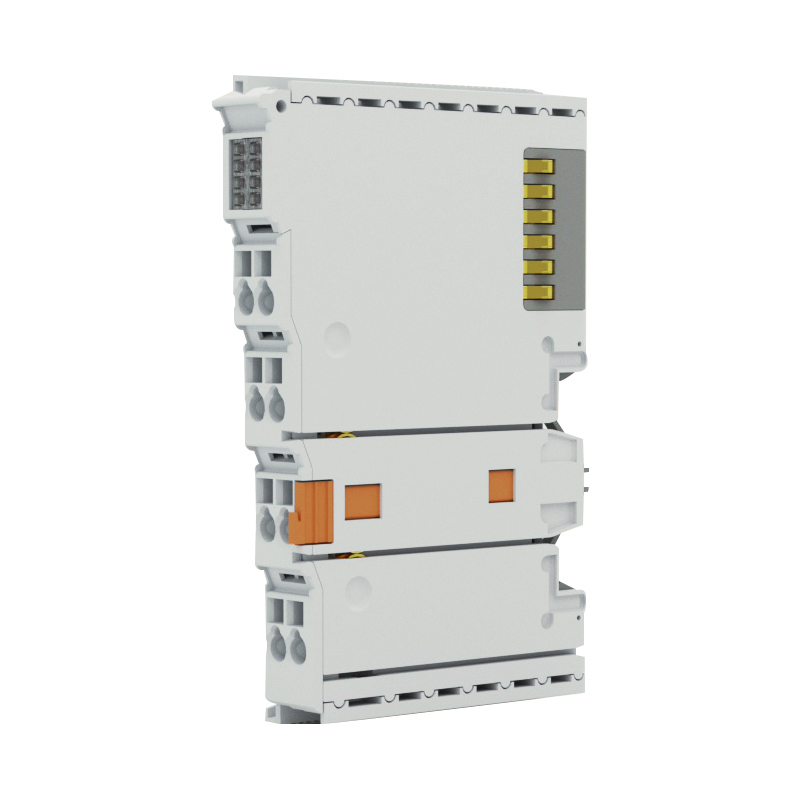
An IO Module, often referred to as an Input/Output Module, serves as the communication bridge between field devices and a central controller. With the rapid evolution of automation, manufacturing, and digital transformation, the IO Module has become an essential component that enhances signal acquisition, device connectivity, and system scalability. Its ability to convert analog and digital signals into usable data allows factories, smart buildings, and industrial equipment to achieve higher operational accuracy and real-time response.
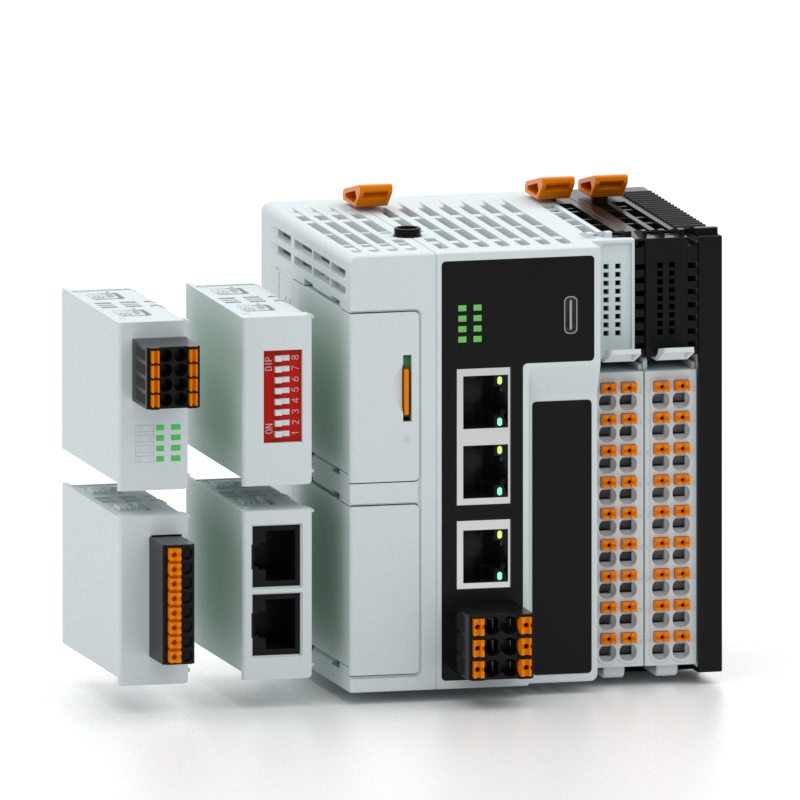
Below is a general parameter overview often considered when evaluating high-performance IO Modules:
IO Module Key Parameters Overview
| Parameter Category | Specification Description |
|---|---|
| Input Type | Digital inputs, analog inputs (mA, V), RTD, thermocouple |
| Output Type | Relay outputs, transistor outputs, analog outputs |
| Communication Protocols | Modbus RTU/TCP, CANopen, Ethernet/IP, PROFINET, RS485 |
| Signal Resolution | 12-bit / 16-bit / 24-bit depending on model |
| Isolation Protection | Optical isolation, surge protection, short-circuit tolerance |
| Operating Voltage | 12–24 VDC or 85–264 VAC depending on application |
| Mounting Type | DIN-rail mount, panel mount |
| Operating Temperature | −20°C to +70°C typical industrial grade |
| I/O Count | 4-channel, 8-channel, 16-channel, 32-channel options |
| Update Rate | High-speed sampling for real-time automation control |
These parameters showcase how IO Modules deliver precise data collection, stable output control, and flexible integration into different industrial architectures. Their primary responsibility is bridging the physical world with the digital realm, enabling manufacturers to achieve truly automated and intelligent operations.
How Do IO Modules Improve System Performance, Safety, and Connectivity in Distributed Automation?
Modern industrial environments require fast, stable, and secure data exchange. IO Modules respond to this demand through a combination of hardware robustness and intelligent design. Below are the key aspects explaining how IO Modules enhance overall system performance:
Enhanced Data Accuracy and Signal Conditioning
Industrial equipment often operates under harsh conditions where noise, fluctuating power, and long-distance transmission can distort data. IO Modules incorporate multiple signal optimization features:
-
High-precision ADC (Analog-to-Digital Conversion)
-
Filtering to remove electrical noise
-
Automatic calibration
-
Isolation to protect controllers and sensors
These features ensure that the central controller receives reliable, distortion-free data essential for decision-making.
Optimized Connectivity Across Multiple Devices
As industrial systems expand, the need for scalable communication becomes crucial. IO Modules support multi-protocol connectivity, allowing seamless integration into mixed-brand ecosystems without hardware conflicts. Through RS485, Ethernet, or PROFINET interfaces, IO Modules link sensors, actuators, PLCs, and SCADA platforms into a unified structure.
Safety Through Isolation and Protection Mechanisms
High-voltage spikes, electromagnetic interference, and unexpected short circuits can damage expensive automation hardware. Industrial-grade IO Modules provide:
-
Galvanic isolation between channels
-
Surge protection
-
Over-current protection
-
Fail-safe fallback states
These features reduce downtime and safeguard both equipment and personnel.
Modularity for Flexible System Expansion
Legacy automation architectures often struggle with scalability. IO Modules eliminate this limitation by enabling incremental expansion. When new devices are added to a production line, engineers can simply attach additional IO blocks without redesigning the entire electrical system. This modularity reduces installation costs and accelerates system upgrades.
High-Speed Response for Time-Critical Applications
In industries such as textile manufacturing, electronics assembly, and high-speed sorting, millisecond-level reaction times are essential. IO Modules ensure rapid data transmission between sensors and controllers, enabling precise timing, motion coordination, and production accuracy.
How Does an IO Module Support Output Control, Real-Time Monitoring, and Application Versatility?
As automation tasks grow more complex, IO Modules perform more than simple signal conversion. Their expanded functionality allows them to act as intelligent nodes capable of real-time decision support.
Real-Time Monitoring for Predictive Operations
By continuously collecting sensor data, IO Modules enable predictive maintenance strategies. Anomaly detection based on temperature, vibration, or current variations helps prevent equipment failures before they occur. This reduces maintenance costs and supports uninterrupted production flow.
Versatile Output Options for Control Applications
Output channels allow the IO Module to control machinery directly, including:
-
Motor activation
-
Valve switching
-
Alarm triggering
-
Relay control
-
Actuator movement
Industrial automation benefits from precise and steady output response, ensuring synchronization among mechanical systems.
Integration into Cloud and Edge Systems
As factories adopt digital transformation, IO Modules often serve as gateways for data transmission to cloud servers or edge processors. Through these connections, organizations can implement remote diagnostics, production analytics, and centralized management dashboards.
Support for Harsh Industrial Environments
Heat, dust, vibration, and humidity challenge the reliability of electrical components. High-quality IO Modules are engineered with:
-
Ruggedized housings
-
Wide operating temperature ranges
-
Conformal coating for moisture protection
These characteristics guarantee stable performance in demanding environments such as chemical plants, steel mills, and outdoor infrastructure systems.
How Will IO Modules Evolve to Meet Future Industrial Automation Trends?
As industries continue to adopt automation, the design and capability of IO Modules evolve significantly. Several trends shape the next generation of IO technologies:
Smarter On-Board Processing
Future IO Modules will integrate more powerful microcontrollers, enabling:
-
Local decision-making
-
Edge computation
-
Real-time filtering and diagnostics
-
Reduced dependency on central PLC load
This evolution enhances processing efficiency while lowering system latency.
Higher Channel Density and Miniaturization
Factories demand more compact control cabinets. Next-generation IO Modules will increase I/O density while reducing module size. This approach supports space-efficient system architecture without compromising performance.
Improved Cybersecurity Features
As connectivity expands, safeguarding data becomes a priority. Enhanced IO Modules will incorporate encryption, user authentication, and secure communication layers to protect against unauthorized access or system tampering.
AI-Enhanced Predictive Maintenance
Sophisticated algorithms embedded directly into IO Modules will soon enable devices to recognize patterns, detect anomalies, and initiate early maintenance alerts more accurately than traditional systems.
Seamless Cloud Integration
Manufacturers increasingly rely on cloud-based dashboards for asset tracking, production monitoring, and data analytics. IO Modules will continue to evolve with better compatibility for cloud protocols, enabling end-to-end intelligent automation ecosystems.
Common Questions About IO Modules
Q1: How does an IO Module connect to different types of sensors and controllers?
An IO Module supports analog and digital interfaces, allowing it to receive signals from a variety of industrial sensors while transmitting structured data to PLCs, SCADA systems, or cloud platforms through standardized communication protocols.
Q2: What is the difference between an analog IO Module and a digital IO Module?
A digital IO Module handles ON/OFF signals required for switches, alarms, and relays, while an analog IO Module processes continuous values such as voltage, current, temperature, or pressure, ensuring high-resolution data suitable for precision automation.
How Can High-Quality IO Modules Strengthen Industrial Competitiveness?
IO Modules play a pivotal role in enabling modern automation systems to achieve efficiency, precision, and operational stability. From data acquisition to device control and predictive analytics, the IO Module supports intelligent decision-making and optimized workflow in various industries. Its evolving design aligns with future needs for smarter processing, stronger security, and greater connectivity across digital ecosystems.
High-reliability IO Modules offered by Sanan® demonstrate how advanced engineering enhances performance and ensures long-term operational security. For organizations aiming to modernize equipment, increase production capacity, and build future-ready industrial infrastructures, selecting robust and versatile IO Modules is essential.
Contact Us
For professional consultation, customization options, and product details, please contact us technical and sales team to explore how IO Module solutions can support your automation strategy.